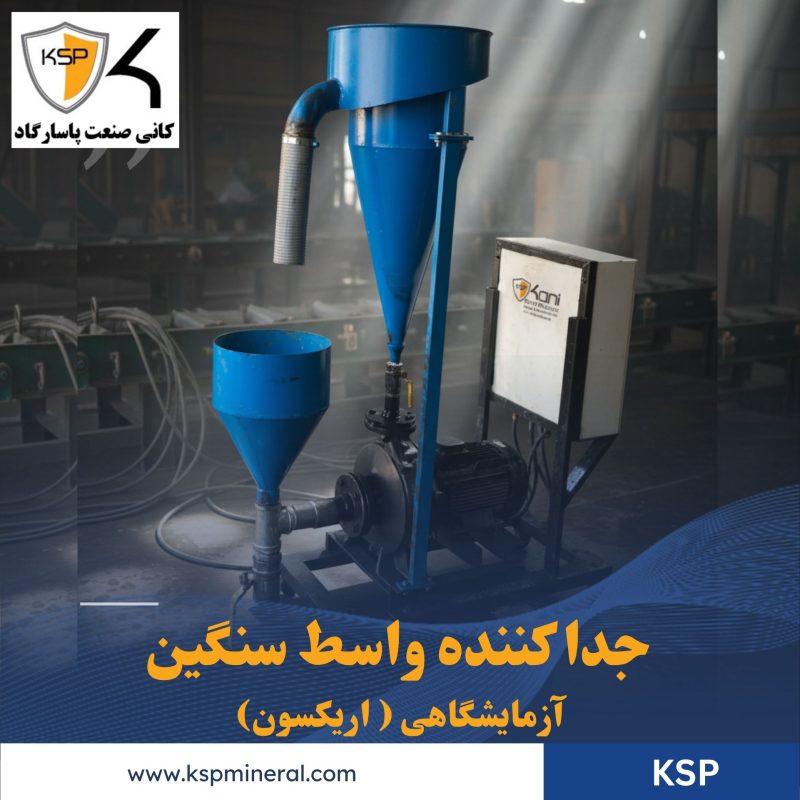


واسطه سنگین چیست و چطور قوانین فیزیک را به خدمت میگیرد؟
اگر بخواهیم به زبان ساده بگوییم واسطه سنگین چیست، باید به مفهوم چگالی بازگردیم. در جدایشهای ثقلی معمولی مثل جیگ یا میز لرزان، ما از آب (با چگالی 1) استفاده میکنیم. اما وقتی اختلاف چگالی کانی و باطله کم باشد، آب دقت لازم را ندارد.
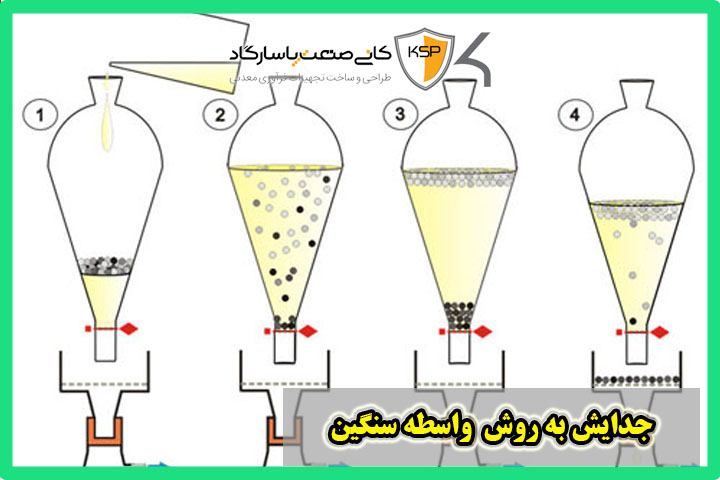
واسطه سنگین (Heavy Medium) در واقع سیالی است که چگالی آن به صورت مصنوعی بالا رفته است. این کار با اضافه کردن پودرهای سنگین مثل مگنتیت یا فروسیلیس به آب انجام میشود. نتیجه کار یک "سیال واسط" است که چگالی آن دقیقا عددی بین چگالی ماده باارزش و باطله تنظیم شده است. در این حالت، ماده سبک روی سیال شناور شده و ماده سنگین ته نشین میشود. این یعنی یک جدایش 100 درصدی بر اساس قانون ارشمیدس.
- سیالی با چگالی بین چگالی کانیهای ارزشمند و باطله در ماده معدنی عمل میکند بر اساس قانون ارشمیدس:
- ذرات با چگالی کمتر از سیال شناور میشوند
- ذرات با چگالی بیشتر از سیال غرق میشوند
- ذرات با چگالی برابر سیال معلق میمانند
- مواد رایج و مشخصات آنها:
مگنتیت (Fe3O4)
- چگالی: 4.5-5.1 g/cm³
- مزایا: ارزان، قابل بازیابی مغناطیسی، غیر سمی
- معایب: چگالی متغیر، نیاز به آسیاب کردن
- کاربرد: زغال سنگ، سنگ آهن
فروسیلیس (FeSi)
- چگالی: 6.4-7.0 g/cm³
- مزایا: چگالی بالا، پایدار، مقاومت خوب در برابر سایش
- معایب: گران، سخت برای بازیابی
- کاربرد: سنگ آهن، مس
گالن (PbS)
- چگالی: 7.4-7.6 g/cm³
- مزایا: چگالی بسیار بالا
- معایب: سمی، گران
- کاربرد: طلا، نقره

Description of the Heavy Media Separation Process:
In heavy media separation, the components of raw materials are separated in a suspension called a dense medium, where the difference in specific gravity between the mineral components and the dense medium causes their separation. Heavy media, made from a mixture of water and fine solid particles, can create slurries with the required specific gravity.
-
- Common Media
The most common media are ferrosilicon, magnetite, and quartz. Ferrosilicon is an alloy of Si and Fe, with iron content not less than 82% and silicon content between 15–16%.
فرآوری به روش واسطه سنگین
اصول کار
- ماده معدنی خرد شده (معمولاً زیر 50 میلیمتر) به سیال واسطه تغذیه میشود
- نسبت ماده معدنی به واسطه: 1:3 تا 1:5
- جدایش در دو نوع تجهیز انجام میشود:
- Heavy intermediate cyclone: برای ذرات 0.5-10 میلیمتر (جدایش بر اساس نیروی گریز از مرکز)
- مخازن جدایش: برای ذرات 10-50 میلیمتر (جدایش بر اساس جاذبه زمین)
مراحل فرآیند
-
آمادهسازی ماده معدنی
- خردایش اولیه و ثانویه
- طبقهبندی برای حذف ذرات ریز (زیر 0.5 میلیمتر)
- خشک کردن در صورت نیاز
-
آمادهسازی واسطه سنگین
- مخلوط کردن پودر واسطه با آب
- تنظیم چگالی به مقدار مورد نظر
- کنترل مداوم چگالی با چگالیسنج
-
مخلوط کردن و جدایش
- مخلوط کامل ماده معدنی با واسطه
- جدایش در سیکلون یا مخزن
-
شستشوی محصولات
- حذف واسطه چسبیده به ذرات
- استفاده از سیکلون شستشو در موارد خاص
-
بازیابی واسطه سنگین
- جدایش واسطه از آب
- بازگشت واسطه به چرخه
- دفع ایمن پسماندها

جدول مقایسه مواد واسطه سنگین
| ماده | چگالی (g/cm³) | مزایا | معایب | Primary application |
|---|---|---|---|---|
| مگنتیت | 4.5-5.1 | ارزان، قابل بازیابی مغناطیسی | چگالی متغیر | زغال سنگ، سنگ آهن |
| فروسیلیس | 6.4-7.0 | چگالی بالا، پایدار | گران، سخت برای بازیابی | سنگ آهن، مس |
| گالن | 7.4-7.6 | چگالی بسیار بالا | سمی، گران | طلا، نقره |
| تتراکلرید کربن | 1.6 | برای کانیهای سبک | سمی، فرار | زغال سنگ |
Advantages of Using the Cyclone Heavy Media Method
دستگاه واسطه سنگین سیکلونی (Dense Media Cyclone) مزایای متعددی دارد که آن را به یک گزینه محبوب در صنایع مختلف مانند فرآوری مواد معدنی و شستشوی زغال سنگ تبدیل کرده است. برخی از مزایای اصلی این دستگاه عبارتند از:
1. Precise Separation of Materials with Similar Density: This device can separate materials with minor differences in density, which is especially useful in mineral processing where particles have similar densities.
2. High Performance and Efficiency: The cyclone device can separate materials with high precision, providing excellent recovery in the separation process. This increases productivity and reduces material loss.
3. Compact Footprint: Compared to other separation methods, such as flotation or other dense media separators, the cyclone requires less space and can operate effectively in industrial environments with limited room.
4. Versatile Application: This device can be used with a variety of materials, including coal, metallic ores, and even in material recycling processes.
5. Cost Reduction: Using the cyclone device can lower operational costs over time, as the consumption of separation media (such as heavy media) is generally less expensive than in some other methods.
6. Easy Maintenance and Repairs: Due to its simple design and user-friendly operation, the cyclone device requires minimal maintenance, and repairs are generally straightforward.
7. Improved Final Product Quality: By precisely separating materials based on density, this device can produce higher-quality products with greater purity across various industries.
In summary, this device provides the ability to quickly adjust the separation density and perform continuous separation
Ease of start-up, shutdown, and stopping of the unit
Low ongoing maintenance and repair costs
It offers high capacity while occupying minimal space.
جدایش واسطه سنگین Heavy media separation can be applied to any type of mineral, provided that after proper comminution there is sufficient specific gravity difference between the particles. This process is widely used for coarse particles, which should be larger than 3 mm, with a minimum specific gravity difference of 0.1
Difference Between Dense Media Drum and Dense Media Cyclone:
In mineral processing, the Heavy Media Cyclone (HMC) is typically used to separate minerals based on density differences. Its main counterpart in similar applications is the Dense Media Drum Separator
Comparison of Dense Media Cyclone and Dense Media Drum
1. Application:
Cyclones are primarily used for separating fine materials, typically below 50 mm.
Drums are generally used for coarser materials, ranging from 50 to 200 mm.
2. Separation Accuracy:
Cyclones offer higher separation accuracy due to turbulent flow and precise control of the dense medium.
Drums have lower separation accuracy compared to cyclones but are more suitable for larger materials.
3. Operating Costs:
Cyclones have higher operating costs due to the need for high-power pumps and additional equipment.
Drums are generally simpler and more cost-effective.
4. Energy Consumption:
Cyclones consume more energy due to the need to generate high flow rates.
Drums consume less energy
Therefore, the choice between these two devices depends on factors such as the type of mineral, feed size, and processing objectives.
Non-Mineral Applications of the Dense Media Cyclone:
In addition to mining applications, the Heavy Media Cyclone is also used in other industries. Due to its ability to separate materials based on density, it is applied in the following areas:
1. Material Recycling:
Plastic Recycling: Separation of different types of plastics based on their density (such as polyethylene, PVC, and PET).
Metal Recycling: Separation of non-ferrous metals from other materials in recycling processes.
2. Coal Industry:
Although it is considered a form of mineral processing, the use of cyclones in coal washing and the removal of impurities (such as ash or sulfur) is highly significant.
3. Energy Industry:
Separation of solid particles from liquids in power plants, particularly in coal-fired fuel handling processes or gas refining operations.
4. Agriculture and Food Industries:
Grain Processing: Separation of cereal grains from impurities or sorting based on density (such as removing low-quality grains).
Oil Processing: Removal of solid particles from crude oil during production.
5. Chemical Industries:
Separation of chemicals with different densities in production or refining processes.
Removal of heavy contaminants from chemical solutions.
6. Waste Management:
Separation of heavy and light components in solid and liquid waste to reduce disposal costs and enhance recycling.
7. Pulp and Paper Industries:
Separation of heavy impurities, such as sand or metals, from wood pulp in the paper production process.
In general, the applications of the Heavy Media Cyclone extend beyond mining and are utilized in any industry requiring the separation of materials with different densities
مقایسه روش واسطه سنگین با سایر روشهای جدایش
| روش | دقت (g/cm³) | ظرفیت | هزینه سرمایهگذاری | هزینه عملیاتی | Primary application |
|---|---|---|---|---|---|
| Heavy intermediate | 0.1-0.5 | بسیار بالا | بالا | Moderate | زغال سنگ، سنگ آهن |
| جیگ | 0.2-0.5 | Moderate | Moderate | پایین | زغال سنگ |
| میز لرزان | 0.3-0.8 | پایین | پایین | پایین | ذرات ریز |
| سیکلون آب | 0.5-1.0 | Moderate | پایین | پایین | طبقهبندی |
تجربه کانی صنعت پاسارگاد در فرآوری به روش واسطه سنگین
پروژههای انجام شده
-
معدن زغال سنگ طبس:
- طراحی و ساخت سیکلون واسطه سنگین با ظرفیت 500 تن/ساعت
- چگالی واسطه: 1.6 g/cm³ (مگنتیت)
- بازیابی واسطه: 99.5%
- کاهش مصرف آب: 20%
-
معدن سنگ آهن گلگهر:
- بهینهسازی فرآیند HMS موجود
- افزایش عیار سنگ آهن از 55% به 65%
- کاهش مصرف واسطه سنگین: 15%
- بهبود بازیابی آهن: 5%
تجهیزات ارائه شده
- سیکلونهای واسطه سنگین:
- سایز: 150-1000 میلیمتر
- مواد ساخت: فولاد ضد سایش، پلیاورتان
- فشار کار: تا 10 بار
- مخازن جدایش:
- ظرفیت: 1-50 متر مکعب
- طراحی با جریان بهینه
- سیستمهای بازیابی واسطه:
- آهنرباهای دائمی/الکتریکی برای مگنتیت
- سیکلون و فیلتر برای فروسیلیس
خدمات تخصصی
- تستهای آزمایشگاهی:
- تعیین چگالی بهینه واسطه
- ارزیابی جدایشپذیری ماده معدنی
- شبیهسازی فرآیند با MODSIM
- آموزش و پشتیبانی فنی 24/7
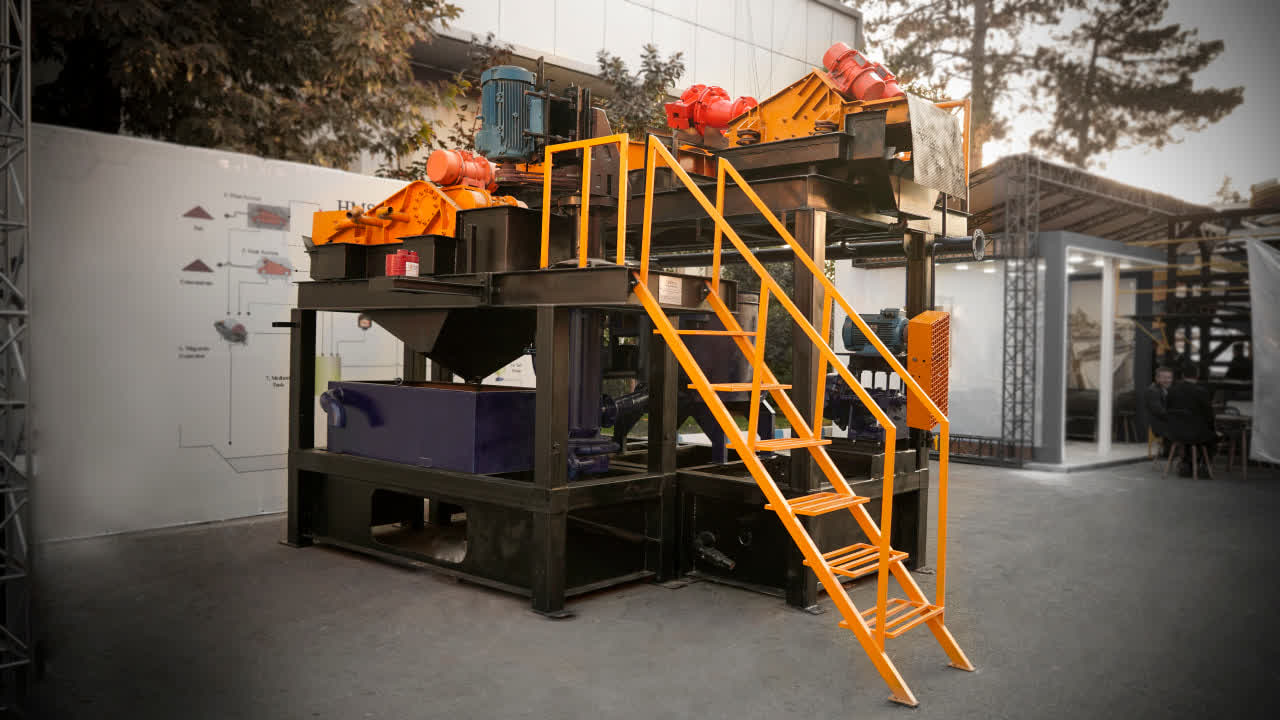
Kani Sanat Pasargad Company از بهترین شرکت های فعال در حوزه ساخت، نصب و راه اندازی واحد های دستگاه واسطه سنگین (هوی مدیا) در ایران می باشد . شما می توانید برای دیدن نمونه کار های تولید شده به صفحه ی محصول (جدا کننده سیلیکونی واسط سنگین) ما مراجعه نمایید .